When is a problem considered scientific?
Ivy Jean, this is a brilliant question and is clearly, very important. Ironically, the nebulous answers posited so far barely hint at why. To be blunt, to properly answer this question, you first need an accurate, real world way to delineate between scientific problems and non-scientific problems. Lists of what qualify do little good. In truth, we need much more.
The current scientific “method” mainly decides this using a sort of cross between a professional popularity contest and a corporate gold rush; a consensus opinion based on money, acclaim, and academia as to which topics to censor and which to explore.
At the same time, to allow just any old question to be the object of a scientific study is just as absurd. Millions have been wasted on things like, “Do fish feel pain when hooked by fishermen.” Jeez.
In between these two extremes lie the problems which would be scientific were they not so rooted in bad science. For instance, take the study on whether St. John’s Wort has any effect on depression.
In my last book, I wrote about this study, which cost something like a million dollars. The outcome? They claimed St. John’s Wort has no real effect at all.
The thing is, this “study” (like most done today) was based on the old science, a method which studies single points in isolation (as opposed to how things exist out in the real world). To be real science, a study needs to constellate all that is known in situ, looking for patterns in the connections while at the same time, leaving nothing out.
This St. John’s Wort study omitted out what turns out to be the critical ingredient; the side effects of taking St. John’s Wort. St. John’s Wort has one significant side effect. It sensitizes the person to sunlight.
Exposure to sunshine has been proven to have anti-depressant effects.
The study never addresses this fact.
Let alone that if you don’t expose yourself to sunlight when you take St. John’s Wort, it has no effect. Duh!
So to answer your question, what qualifies as a scientific problem?
I personally see anything we can ask about ourselves and our world as being worth exploring. We grow as human beings only when our knowledge grows. And having a formal system with which to do this is incredibly important. So while I acknowledge the great contributions the current scientific method has made to our lives, it’s time for a method which works the same out in the world as it does in the lab.
What about the answers here which imply that science should limit its explorations to physical things? In part, this points to the kind of censorship which constantly plagues authentic scientists and aspiring geniuses. We human beings love, hate, and even feel inspired by so many things, including by science. Are these feelings to be deemed unimportant? Should they be seen as unworthy of being understood?
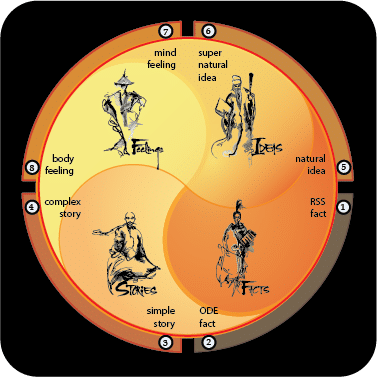
I, for one, vote “no” to all this. Human experience matters. Which in part is why, in my last book, I posited a new scientific method, one in which no topic is off limits and nothing can be left out. Including love.
Thank you again for your wonderful question.