Why does a purely chemical event in the brain often cause a permanent shift in a person’s behavior?
Interesting question. Very interesting. And complicated.
To begin with, the idea of a “purely chemical event” is completely and utterly impossible. This would mean that a chemical event in the brain [1] has no physical or mental precursor, [2] has no co-existing physical or mental content, and [3] has no accompanying uncorrelated behavioral activity. So your use of the word “often” seems odd.
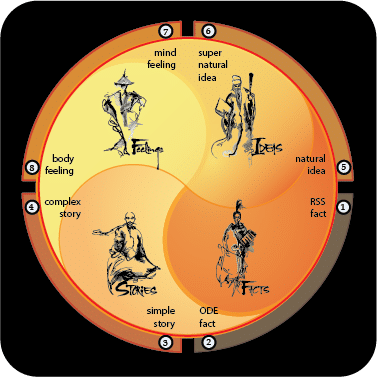
Second, you use the word “permanent.” Are you talking about will-powered behavioral changes? Or are you referring to behavioral changes resulting from changes in the person’s actual nature—what in my theories I refer to as “emergences,” and what most people call epiphanies, ahas, or life-changing realizations? Since no one has unlimited will power, no will-powered changes are ever permanent. And while any and all emergences are permanent, they can only occur by affecting the full spectrum of the person’s mind and body.
Third, you do not mention changes correlated with brain plasticity. Certainly these changes are not “purely chemical.” Yet they clearly must be correlated with, and accompanied by, chemical changes in the brain. Also, given there is no serious future atrophy, we could say that these changes are often as “permanent” as any significant physiological changes can be. Learning to ride a bike surely qualifies.
So what can we actually say? That like dissecting frogs to see how their legs work, exploring anything in isolation misses the entire point of the word “nature.” To know how the frogs legs truly function, you must see said legs in action. Similarly, to know the nature of brain chemistry, you cannot explore these chemicals separately.